
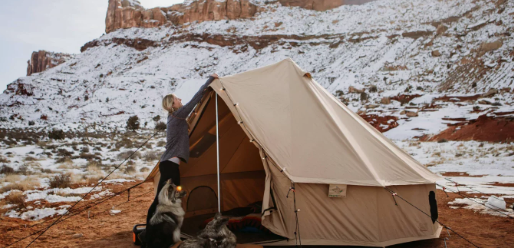
Choosing the right four-season tent can make all the difference in your outdoor adventure, especially in unpredictable weather. Understanding what features to prioritize will ensure that you stay warm, dry, and safe, no matter what Mother Nature throws at you. Here’s a guide to help you select the ideal four-season tent for your needs.
1. Understand the Tent’s Fabric and Material
The fabric of a four-season tent plays a crucial role in its durability and weather resistance. Look for tents made of high-denier nylon or polyester, as these materials are resistant to tearing and wear. Additionally, check the waterproof rating, which is measured in millimeters; a rating of 3000 mm or higher is recommended for heavy rain and snow conditions.
The construction of the tent floor is equally important. A tent with a bathtub floor design helps keep water from pooling inside, adding an extra layer of protection from the elements. Higher denier materials won’t only increase the tent’s lifespan but also offer better insulation in colder conditions.
-
- Choose fabrics that are at least 68D or higher for durability.
-
- Look for waterproof ratings of 3000 mm or more for rainy scenarios.
-
- Check if the tent features a bathtub floor design for drainage.
-
- Investigate UV resistance if you’ll be camping in sunny locations.
2. Evaluate the Tent’s Design and Structure
A four-season tent must be sturdy and well-structured to withstand snow load and fierce winds. Look for geodesic or dome shapes, as they distribute wind pressure evenly and won’t easily collapse during storms. Some models also come with extra guy lines and pegs for additional stability in extreme weather.
Also, consider the internal space and layout. A tent with more vertical walls will provide better livability, while a design that allows for easy setup can be crucial during dark or inclement conditions. Read user reviews on the setup process to avoid rookie mistakes.
-
- Opt for a dome or geodesic shape for wind resistance.
-
- Check for sturdy stitching and reinforced seams.
-
- Look for multiple vestibules for gear storage.
-
- Read reviews for insights on setup difficulty.
3. Think About Weight and Portability
Weight can be a determining factor when choosing a four-season tent, especially if you’re backpacking. Look for lightweight materials without sacrificing durability. Some manufacturers offer tents that balance weight and strength, often made of advanced composites.
Additionally, consider how the tent packs down. Compression sacks are handy for reducing volume. Also, think about how you will transport the tent; integrated carrying bags with straps can make hiking to your campsite much easier.
-
- Choose a tent weighing less than 5 kg for backpacking.
-
- Look for tents that pack into a manageable size.
-
- Consider a split-pole design for easier transportation.
-
- Test the carrying bag for comfort during hikes.
4. Assess Ventilation and Condensation Management
Even in a four-season tent, good ventilation is vital to prevent condensation build-up inside the tent. Look for models with adjustable vents or mesh panels, which allow airflow without compromising warmth. Some tents come equipped with multiple vents that can be managed depending on the weather conditions.
Additionally, condensation can be less of an issue if you choose a tent with a rainfly that offers good airflow, allowing humid air to escape. When setting your tent, aim to position it in an area that allows for optimal airflow, ideally on higher ground or near openings that let air pass through.
-
- Investigate tents with adjustable vents or mesh options.
-
- Look for rainfly designs that enhance airflow.
-
- Choose a tent with an inner tent made from breathable materials.
-
- Setup the tent in locations that facilitate good airflow.
When choosing a four-season tent, doing your research and considering specific factors can vastly improve your experience in the wilderness. Focus on durability, structure, weight, and ventilation to make an informed decision. Remember to consult product reviews, talk to fellow campers, and, if possible, visit outdoor retailers to see your options in person. Happy camping!