
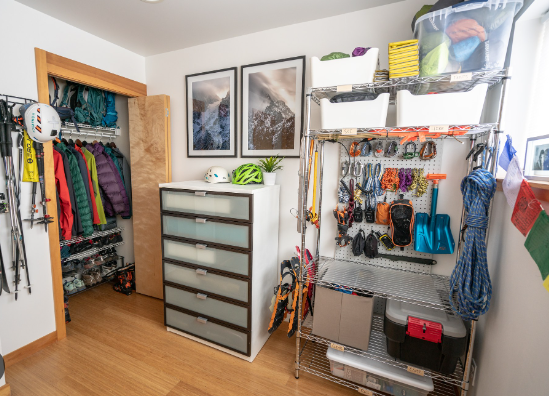
Hiking is an exhilarating experience that allows you to connect with nature and unwind from daily routines. However, organizing and storing your gear at home can be a challenge. By implementing a few simple strategies, you can create a functional and efficient storage system that protects your equipment and keeps everything accessible for your next adventure.
1. Create an Organized Space
The first step to effective hiking gear storage at home is to designate a specific area for all your equipment. Whether it’s a closet, a corner of your garage, or a dedicated room, having a defined space will help you keep everything in order. Ensure that this space is dry and climate-controlled, as moisture and extreme temperatures can damage gear over time.
Use shelving units or storage bins to categorize your gear. For example, you could have one shelf for backpacks, another for footwear, and a third for clothing and accessories. Labeling each section will make it easier to find what you need, especially when you’re in a hurry. The goal is to make the area functional without feeling cluttered.
-
- Designate a specific storage area.
-
- Use shelving units or bins to categorize gear.
-
- Label each section clearly.
-
- Ensure the space is moisture-free.
-
- Keep frequently-used items at eye level for easy access.
2. Utilize Storage Solutions
There are numerous storage solutions available that can help maximize your space and keep your gear protected. Consider using clear plastic bins for small items, such as first aid kits, snacks, and utensils. This ensures you can see what you have at a glance, making it easier to grab and go on your next outing. For larger items like tents and sleeping bags, vacuum-sealed bags can minimize their size and protect them from moisture and pests.
Another innovative idea is to use vertical space. Wall hooks or pegboards can be an excellent solution for hanging items such as water bottles, trekking poles, or smaller backpacks. Not only does this save space, but it also keeps your gear visible and accessible, reducing the chances of misplacing essential items before a hike.
-
- Use clear plastic bins for smaller items.
-
- Consider vacuum-sealed bags for sleeping bags.
-
- Incorporate wall hooks or pegboards for hanging gear.
-
- Group similar items together for easy access.
-
- Store seasonal gear separately to save space.
3. Maintain and Rotate Gear Regularly
Regularly maintaining and rotating your gear is key to longevity and safety on the trails. Start by inspecting your equipment for any damage, such as wear and tear on backpacks, zippers, or tent seams. Make it a habit to clean your gear after each camping or hiking trip; this keeps it in top condition and ready for your next adventure. Furthermore, consider creating a seasonal rotation for your clothing and gear, such as switching out summer hiking gear for winter items, ensuring you always have what you need on hand.
Establish a routine for inventory checks to see what you have and what might need to be replaced or upgraded. This can include checking expiration dates on items like first aid supplies and food. Additionally, consider donating or selling any gear you no longer use; this can help declutter your space while possibly benefiting someone else who enjoys the outdoors.
-
- Inspect your gear regularly for wear and tear.
-
- Clean gear after every use to maintain quality.
-
- Rotate seasonal items regularly.
-
- Do inventory checks for needed replacements.
-
- Donate or sell unused gear to declutter your space.